DragonScales: The Hero Levels
DragonScales: The Hero Levels, 25 Fantasy Etudes to Slay Evil, is a revolutionary role playing video game-inspired etude book where you, the player, are the hero in an original magical adventure fantasy. The 25 etudes and accompanying audio play-along recordings are the soundtrack to the story. Choose between three difficulty modes as your skills are tested through technical passages, extended techniques, workbook theory, and improvisation—while your hero character battles to slay evil.
This book has three components: the written story, the notated etudes, and the audio play-along recordings. The audio play-along accompanies the etude, and the etude accompanies the scene. All relevant external links are accessed on a single QR code and clickable link page. For a fully immersive experience while playing your instrument with the recordings, wireless earbuds, headphones, or quality speakers are highly recommended.
FEATURES:
-
Violin
Viola
Cello
-
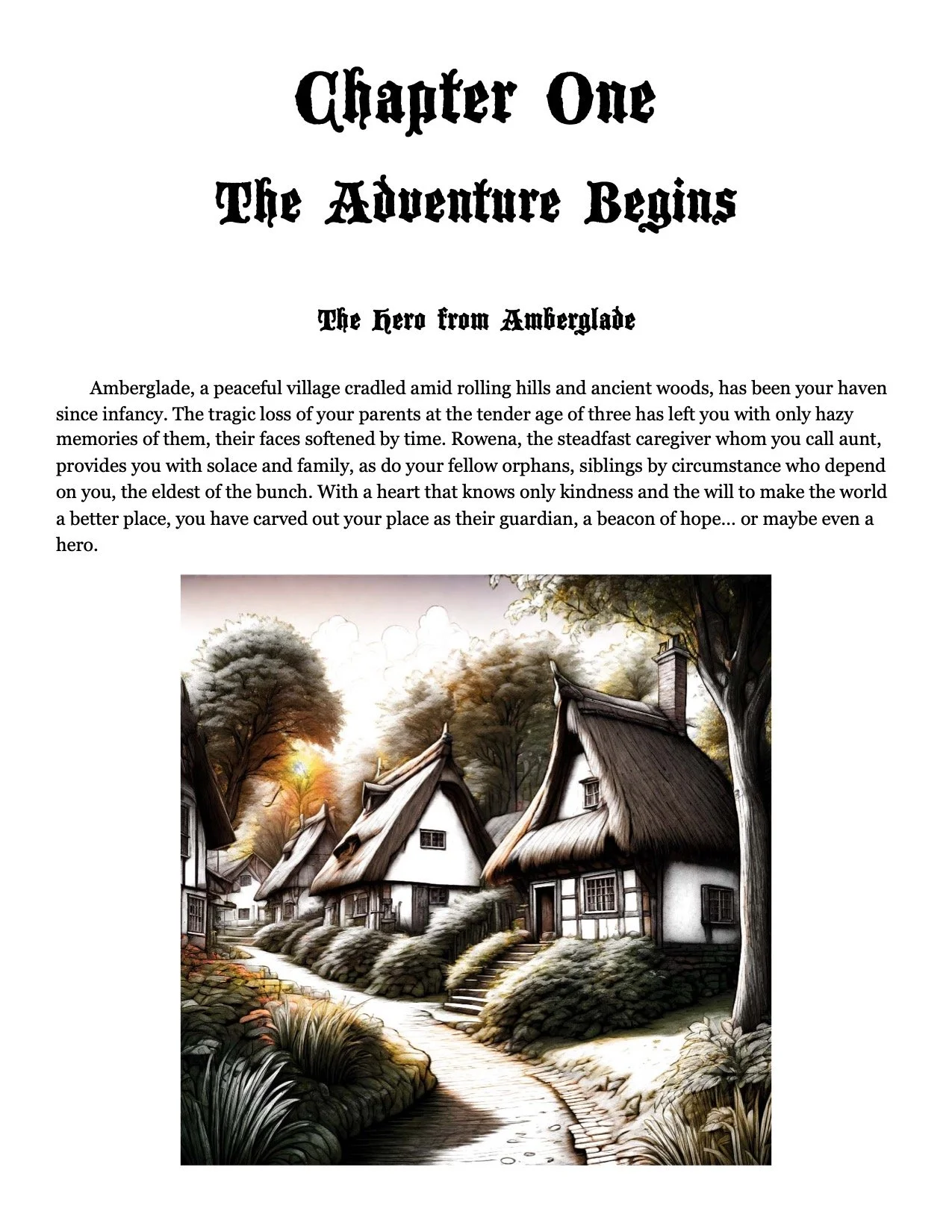
Original story and art
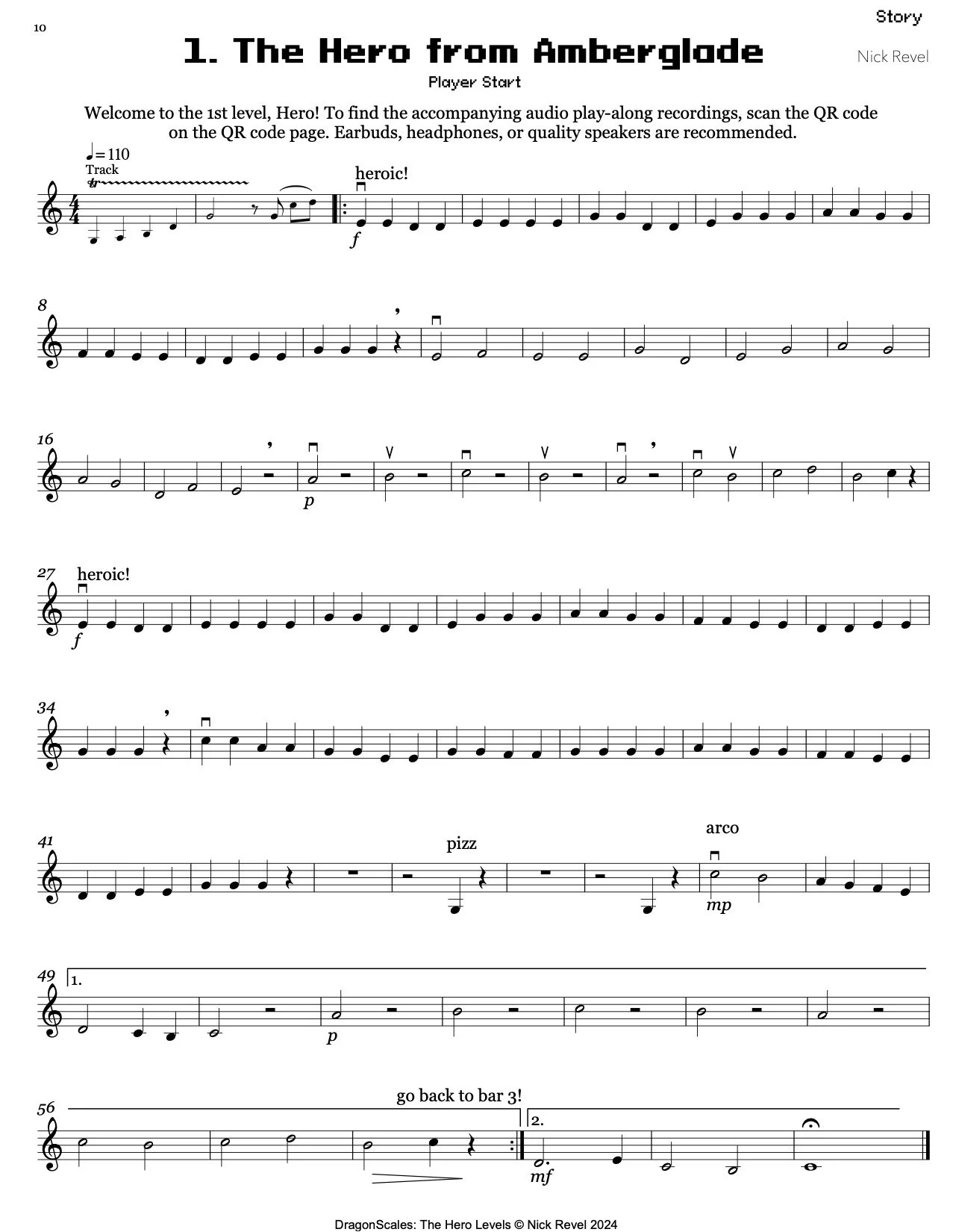
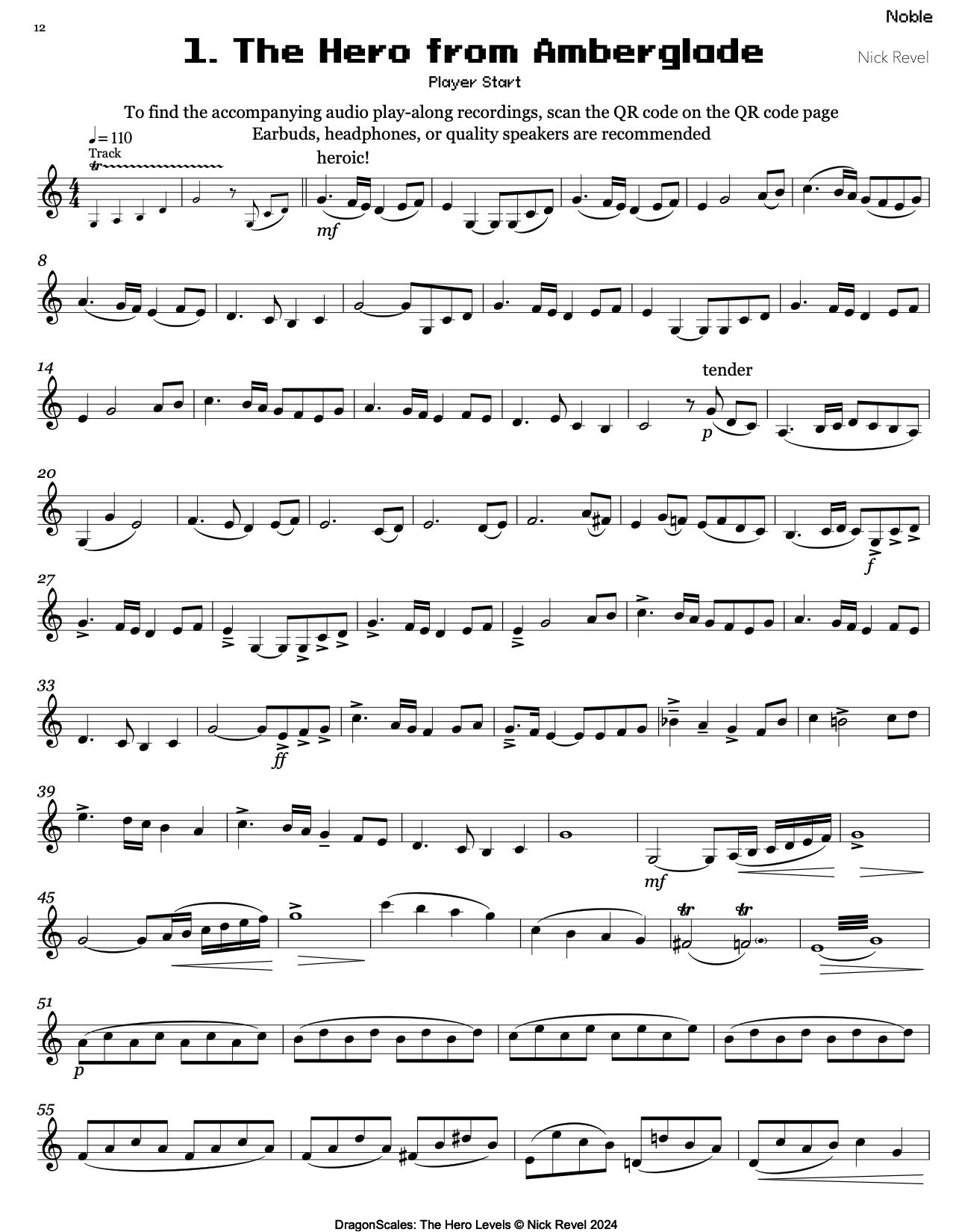
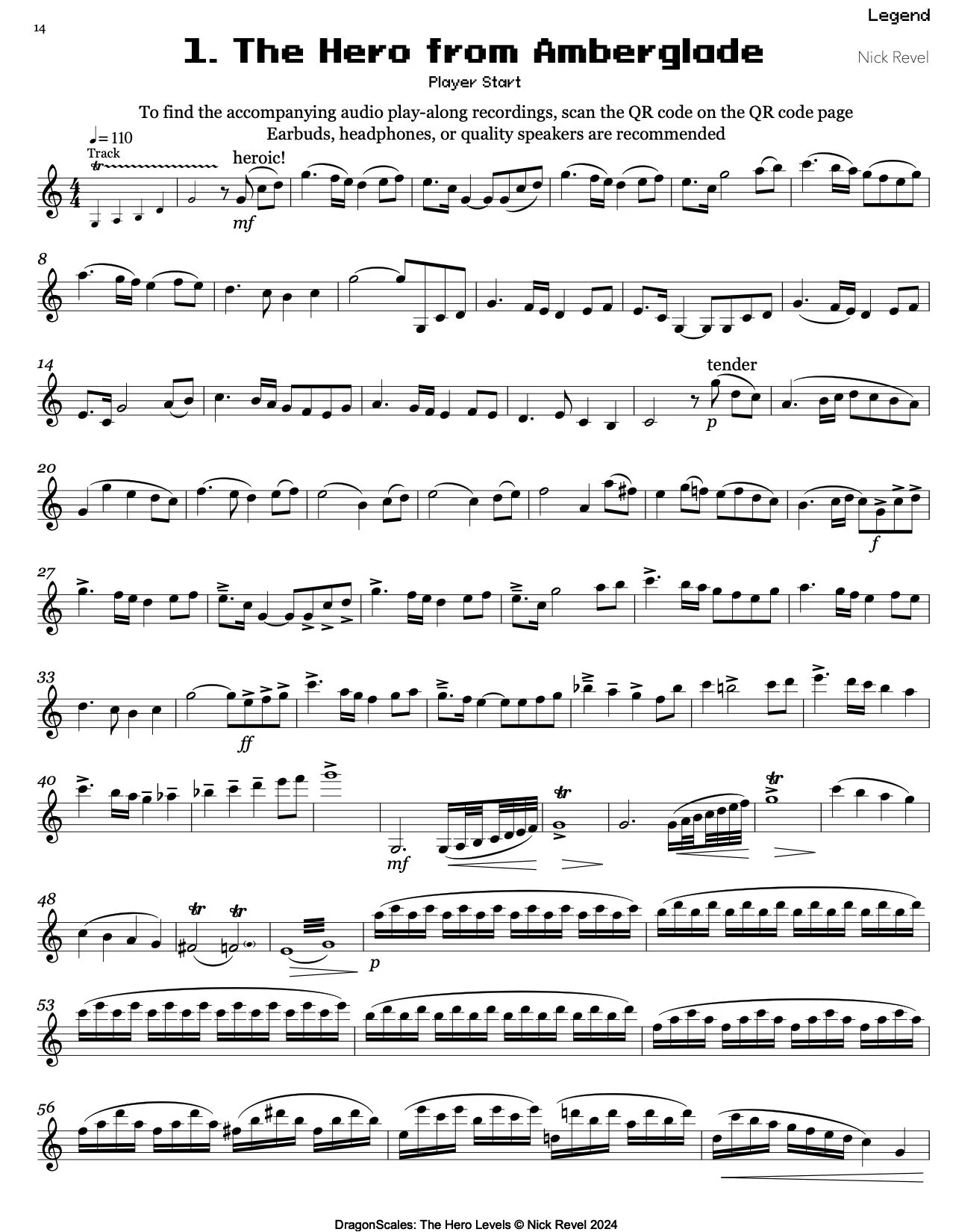
Etude sheet music
Audio play-alongs
Demo play-throughs
Practice tempo audio
Etude walk-throughs
-
Story (Easy) = Suzuki book 2-5
Noble (Medium) = Suzuki book 5+
Legend (Hard) = Concerto level
All share the same art, story, and audio play-alongs
-
Technical passage work
Musical storytelling
Extended techniques
Ear training
Theory
Guided improvisation
-
“Revel's series…will transform how you teach and play. His mission, to make practice fun and enjoyable as well as educational, comes to fruition in these resourceful and very imaginative books." — Mary Nemet, Strings Magazine
“…the things that are happening in the story, you can directly hear happening musically in the etude…I really really really love these books!” — Rebecca Rovny, YouTube
“…created to chime with the imagination and lifestyle of the young musician of today…it is well worth exploring.” — Alex Laing, The Strad Magazine
“My students are having a great time! I've got a bunch of gamers who love it! “ — Amy, K-12 classroom teacher, KS
“…I’ve had a lot of fun with this. I highly recommend this to anyone that wants…something a little different than repetitive course work.” — David Moyer, Amazon customer
“Some of my favorite things are: the way that young musicians get to practice with a track with lots of opportunities to reflect on their intonation and their rhythm…The way that many of my students identify with being a player in a video game.” — Melinda Rice, violinist/composer/teacher
Try the Hero Levels
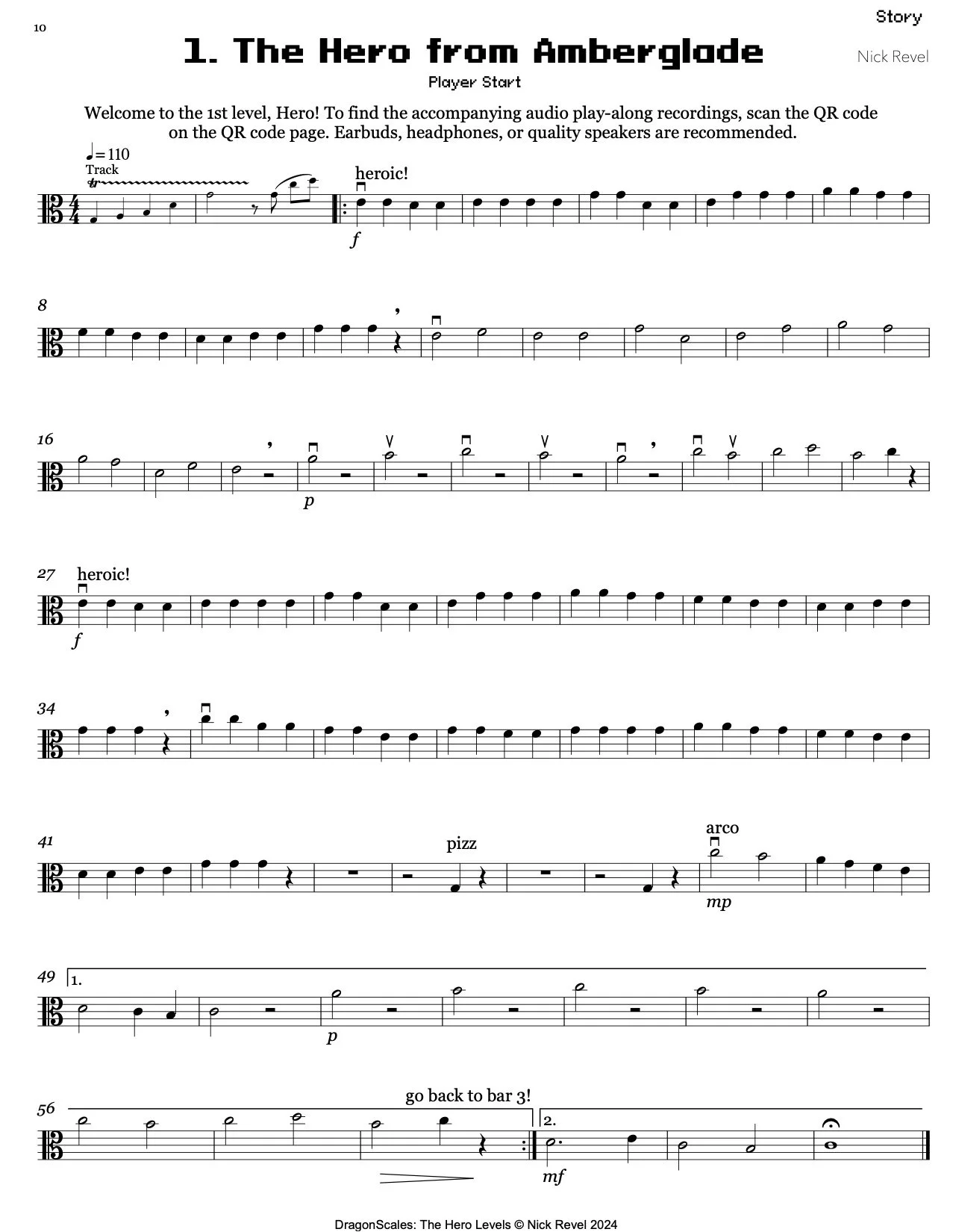
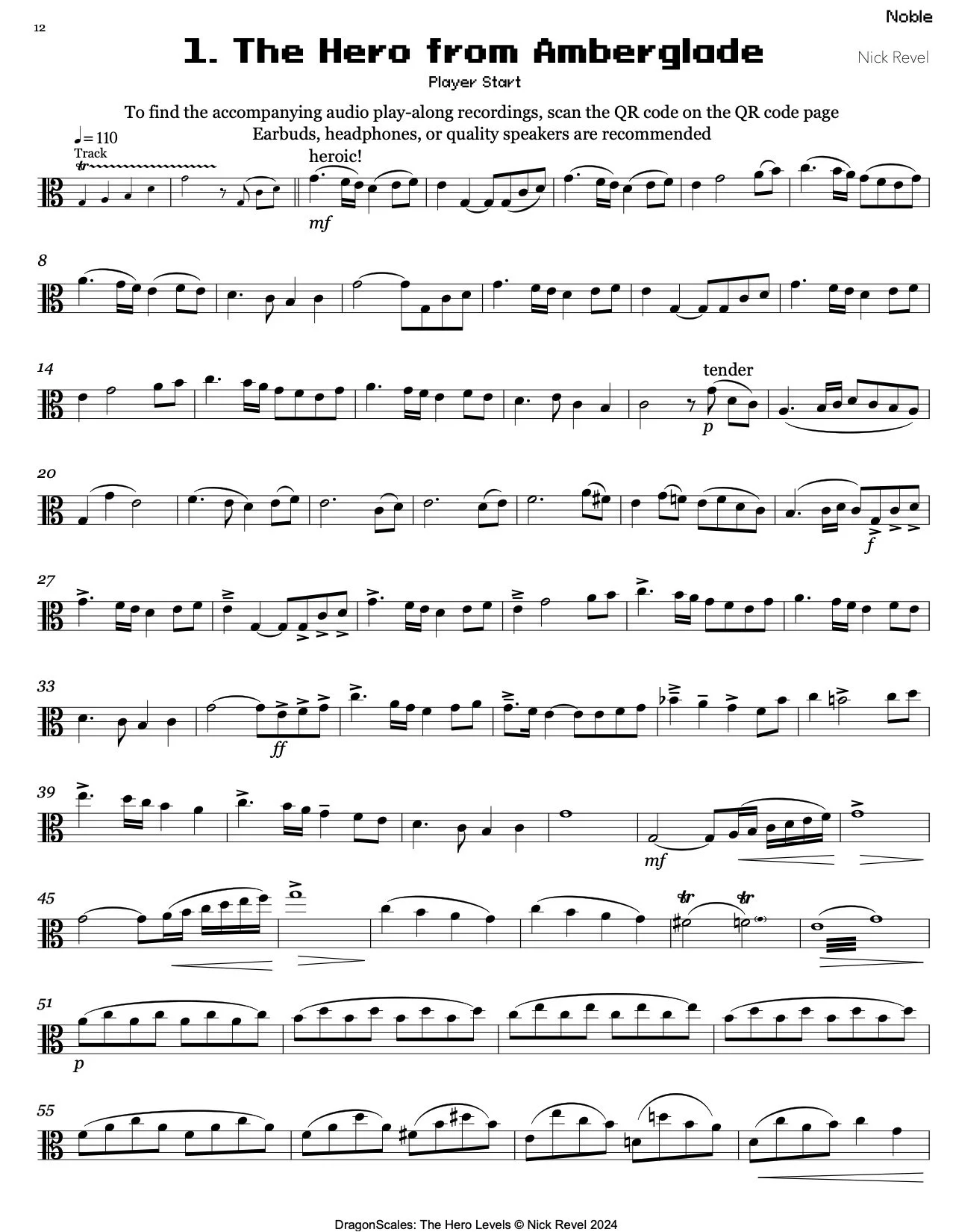
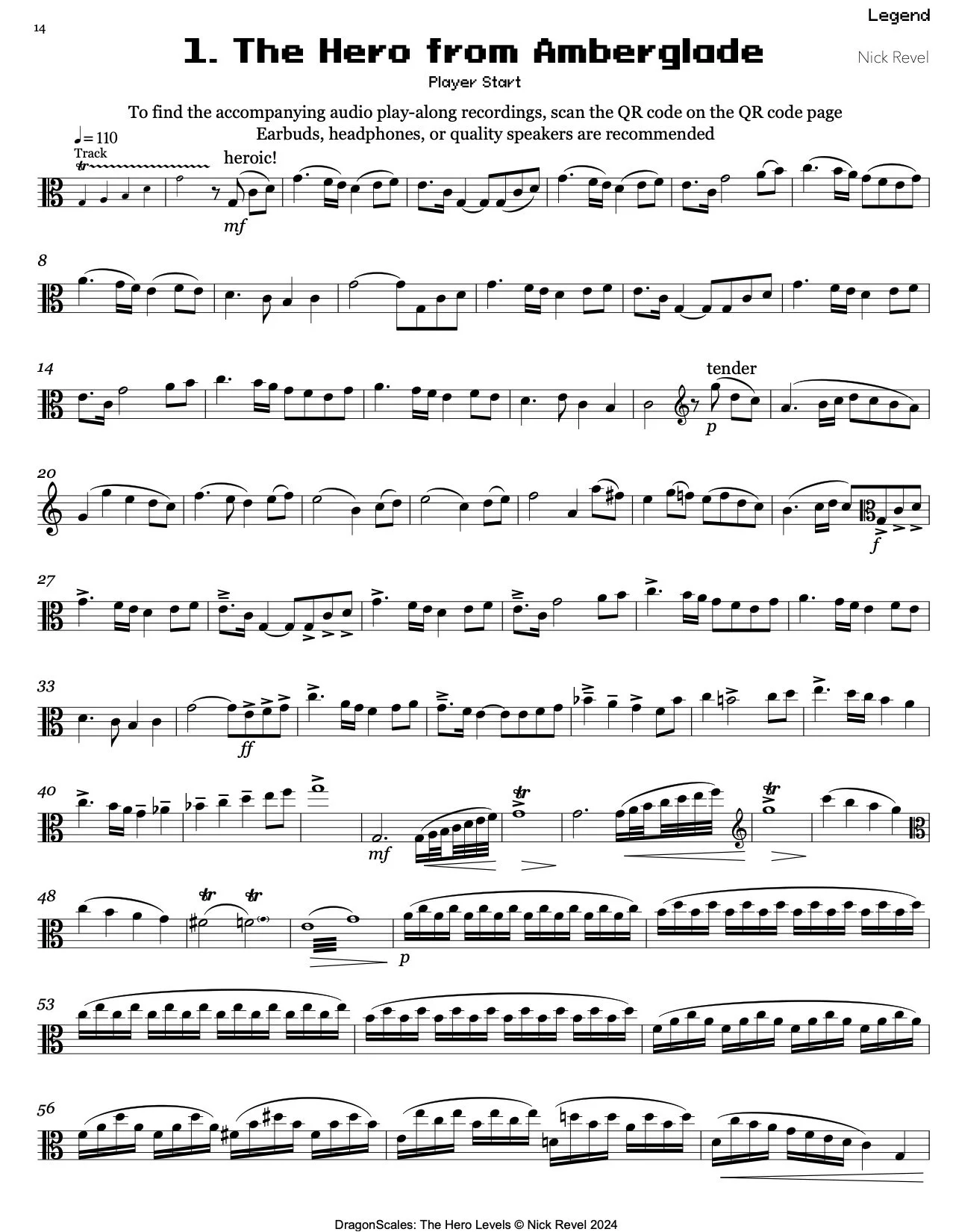
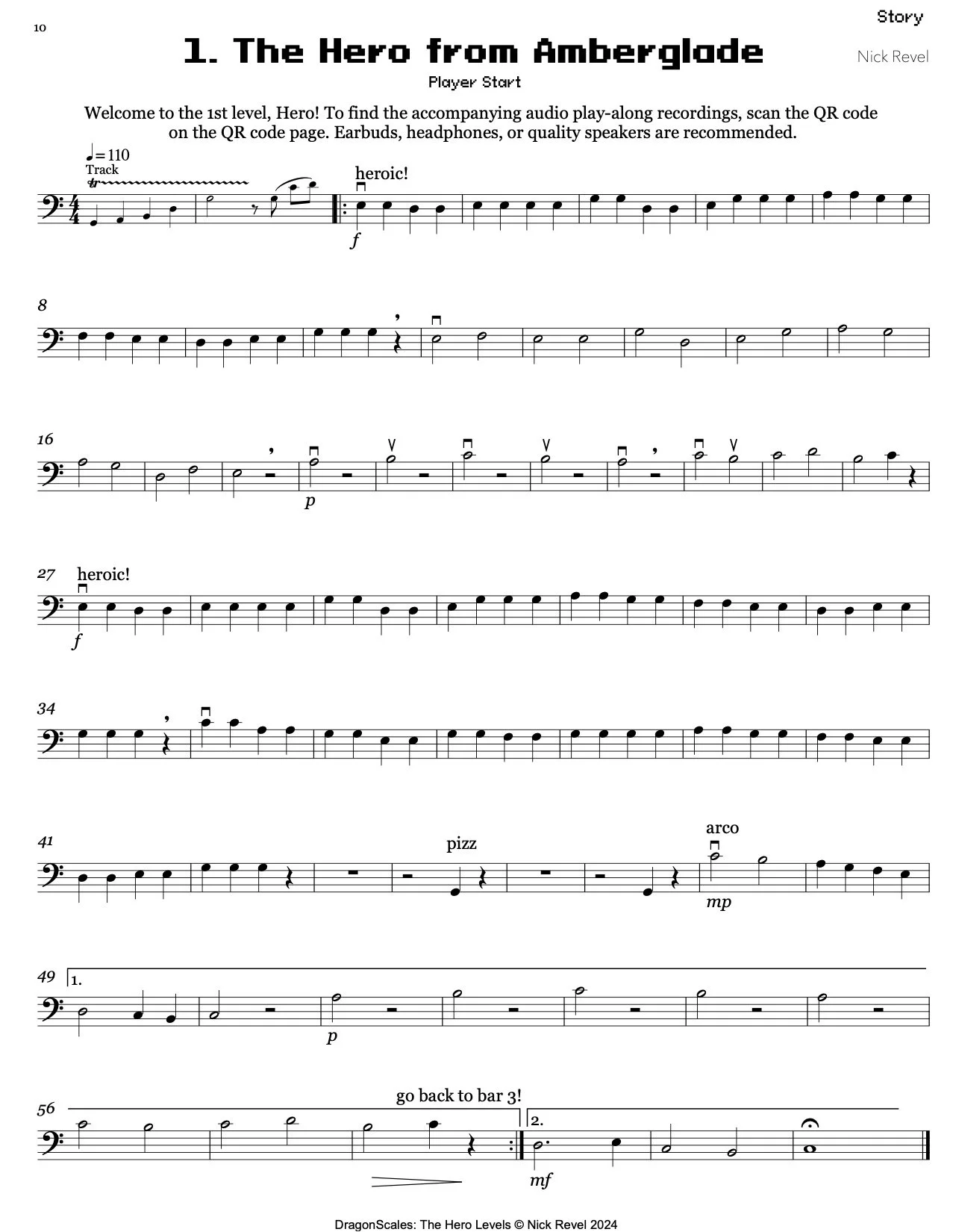
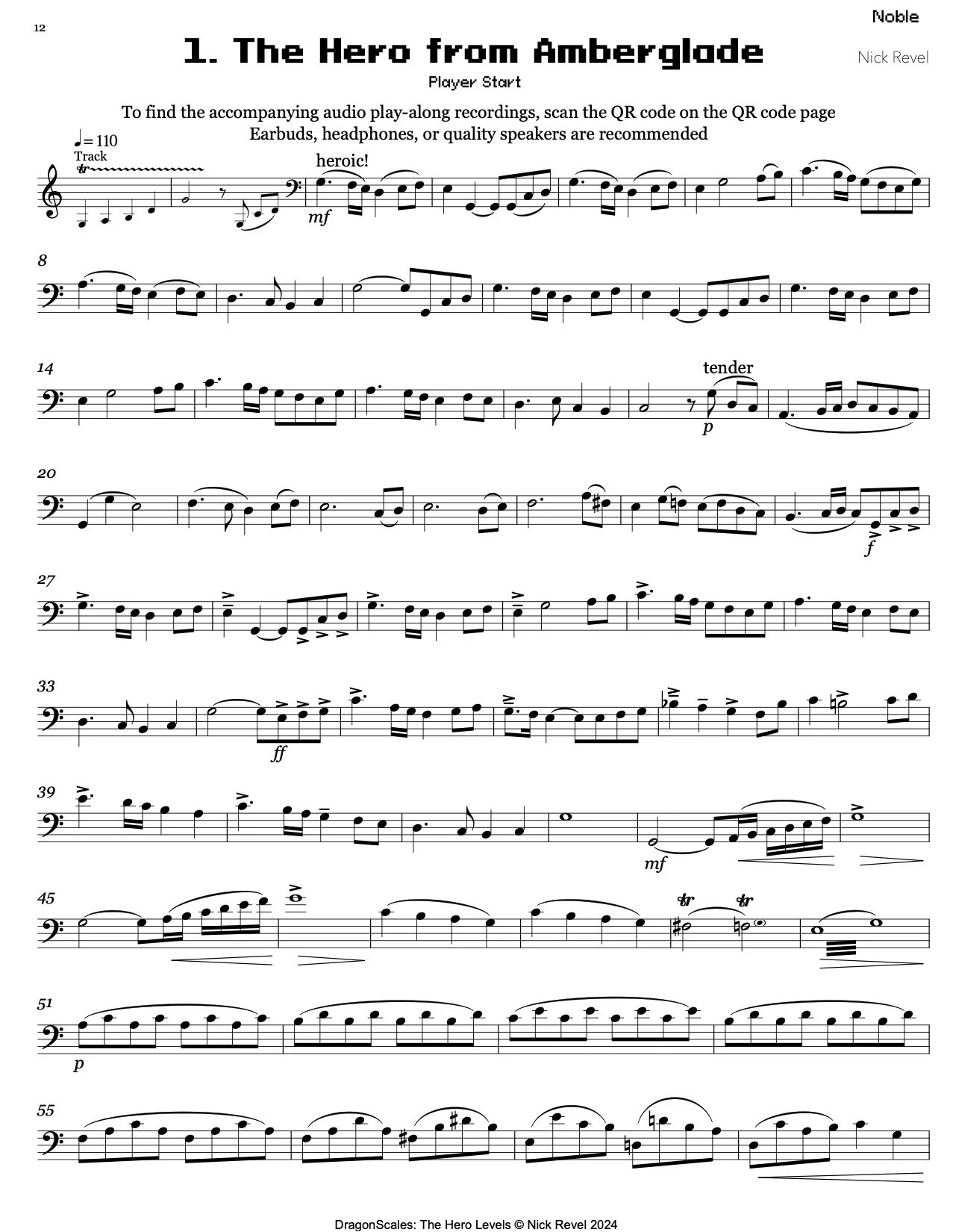
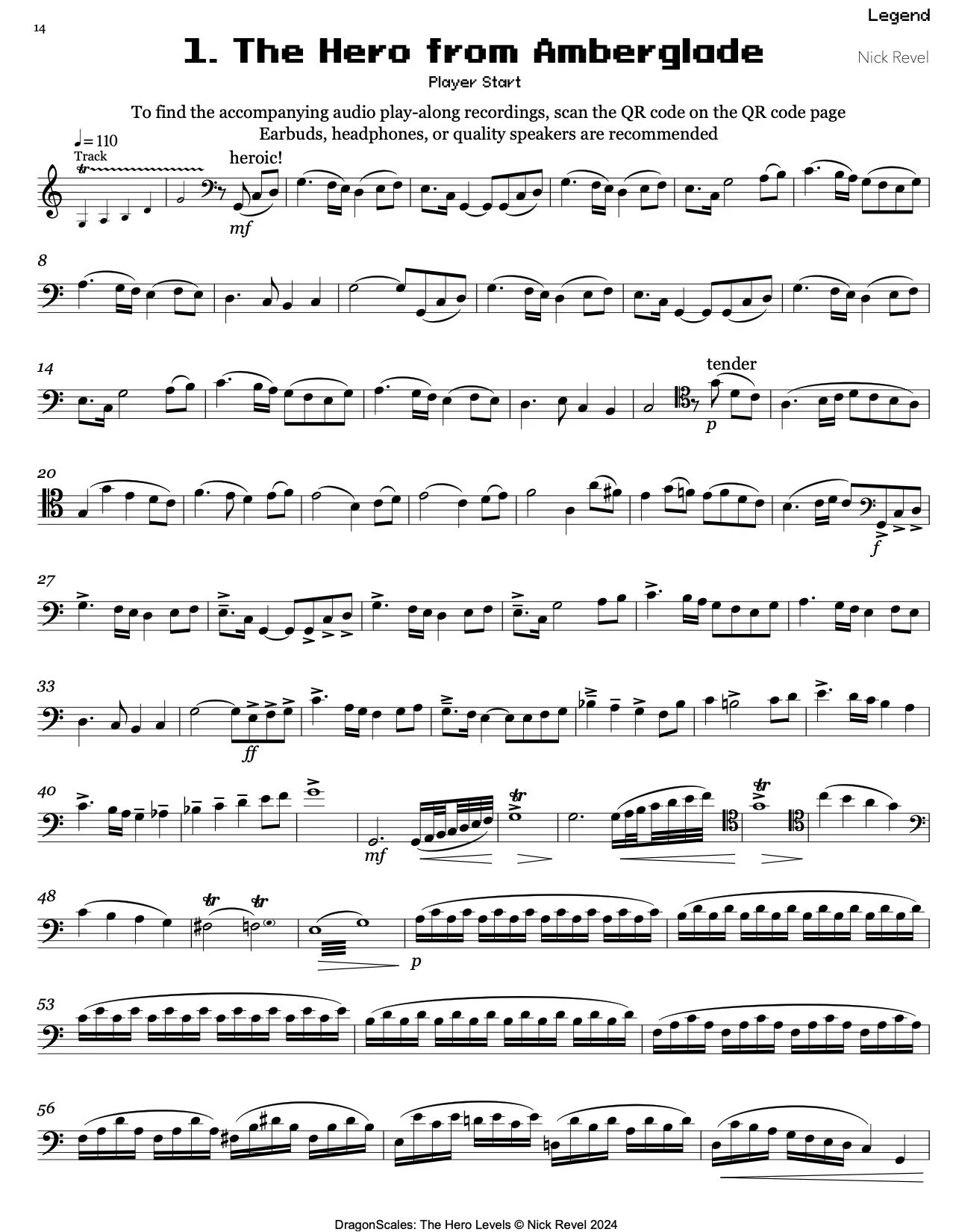
Click below on the YouTube link to hear the 1st etude’s audio play-along, then click on your instrument to open the sheet music. Choose between Story, Noble, and Legend difficulty modes.









PURCHASE THE HERO LEVELS
-
Individuals
Choose your instrument and your difficulty mode. Story mode roughly equates to Suzuki Book 2-5, Noble to Suzuki Book 5+, and Legend to a concerto Level.
Studio Teachers
Triple Packs include all three difficulty modes—Story, Noble, and Legend—grouped together by etude in order of difficulty, making it easy to switch between levels.
Classroom Teachers and conductors
Purchase score and parts sets for any single etude or the Complete Orchestral Bundle for the entire journey. Try “1. The Hero from Amberglade” in this format for free. Bulk pricing available for paperbacks.
If you have any questions, please send a message.
-
-
-
-
Individual Etudes:
The Hero From Amberglade (Free download)
FAQ’s
-
QR code page linking to audio
Original story and artwork
Fully notated etudes
-
Story mode roughly equals Suzuki Book 2-5
Noble mode roughly equals Suzuki Book 5+
Legend mode roughly equals a concerto level
-
Find the QR code page near the beginning of the book and scan the QR codes with your smart phone in or tap the links in the PDF. The QR codes will open the YouTube app on a phone or tablet and will open your web browser on a laptop or desktop.
-
When playing your instrument with audio play-back, it’s crucial to be able to hear both well.
If you you have to play fortissimo in order to hear yourself, then your audio volume is too high.
If you have to play piano in order to hear the audio, then your audio volume is too low.
The right balance makes you feel like you are playing in a chamber group or band.
If you are using sound cancelling earbuds, make sure they are set to transparency mode so you can still hear yourself.
-
No. I am not a partner with YouTube and cannot disable their ads. The solution is to download the offline audio folder directly onto your device, bypassing YouTube entirely.
-
Yes.
Transfer any audio files directly to your iPad or tablet.
Select all the play-along files you want to add to the Forscore app.
Find the “share” icon and under the “open in” menu, hit Forscore. Nothing will appear to happen.
Open Forscore. While scrolling your scores library list, hit “Edit” in the main menu. Tap your Hero Levels score.
Tap the “Audio” button in the menu.
Tap the rectangular audio icon in the lower right of that window.
Add all of the play-alongs to this score. Exit the menus.
Open your Hero Levels score and tap the middle of the screen. You should see a new audio player window at the bottom of your score.
Here you can scroll through the different audio files, change playback speed without changing pitch, change pitch without changing speed, create a loop brace, record your page turns into the audio file directly.
-
Read the scene text directly before the etude.
Listen to the audio play-along or demo play-through for that etude.
Identify musical story connections.
Identify technical challenges.
Do a crash and burn sight reading.
Practice the etude away from the audio until all notes, rhythms, bowings, and fingerings are fully learned at a slow tempo.
Play along with the practice tempos, starting at 60% with click, and working your way up to 90% without click.
Play along with the full-tempo play-along. If you made it through the etude with physical comfort, technical accuracy, and musical intention, then you’ve mastered the etude and can move to the next level.
-
No. You must find your own path. Part of the learning process is understanding what fingerings work for you, in a given passage, to serve a particular expression. This is a new-music mentality because when a composer writes a piece for you, there will be no fingerings.
-
No. They are entirely optional. However, they are highly beneficial as they do provide tempo and time feel, pitch, ear training, and chamber music skills.
-
No. The story is supplemental to the music. But the music acts as the soundtrack to the story, so reading the scene will give you musical context for mood and emotions.
-
No. The etude book acts as a complete linear story but you can play whatever etude you like in whatever order you like.